What gives a helmet its retro look?
Look closer at the silhouettes, restrained colours and graphic details that give a motorcycle helmet its vintage character.
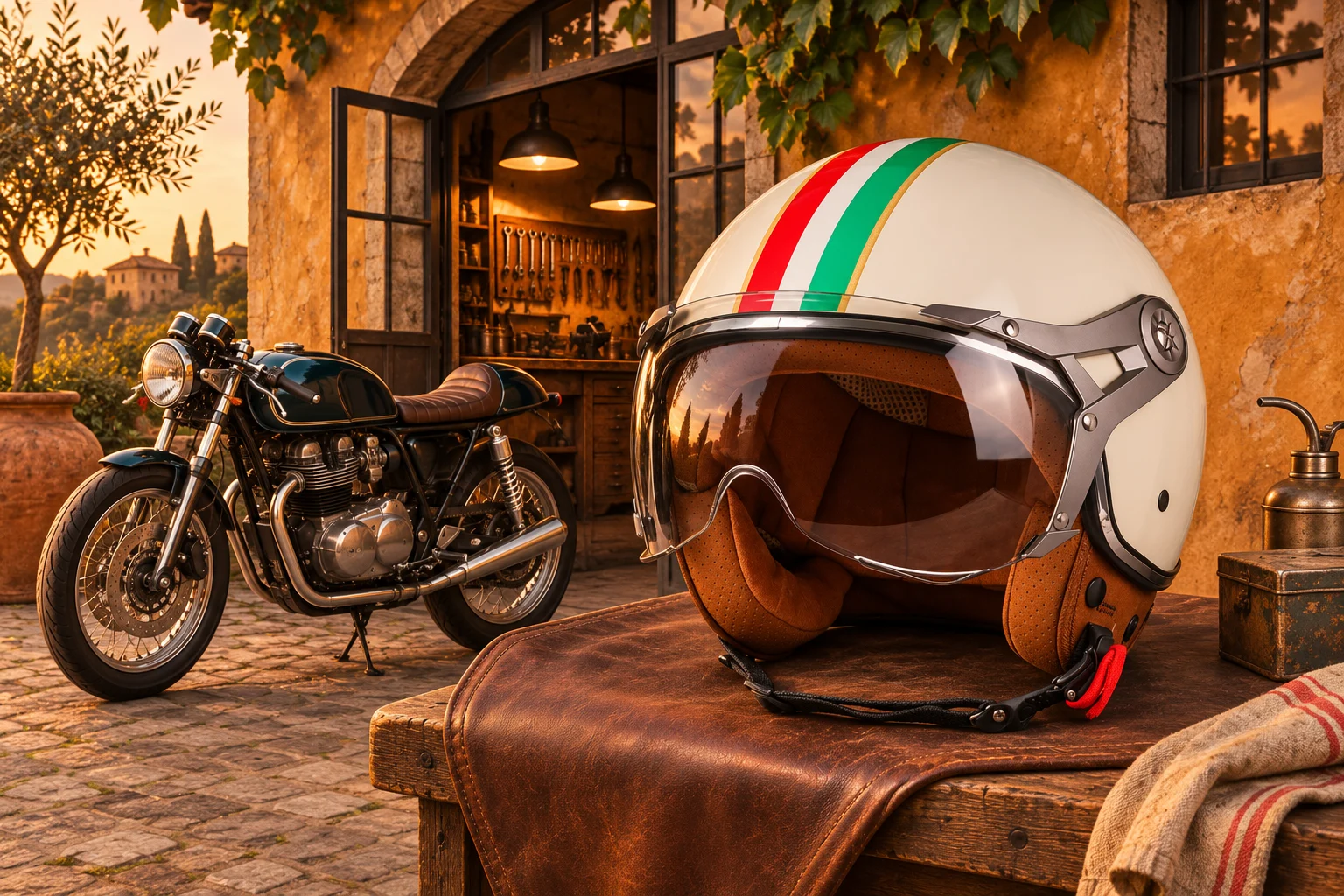
Start with the silhouette
A helmet reads as vintage from across a room when its overall outline is easy to recognise. A rounded crown and a simple brow line make a deliberate contrast with the sharp angles often used in race-inspired graphics. Look at the profile from the side first. The relationship between the crown, face opening and lower edge tells you more about the design than a close-up of a badge.
Let one colour lead
A restrained palette gives the shape room to do the work. Cream and deep burgundy can feel like paint from a well-kept workshop. Charcoal and brass tones shift the same profile toward a darker café-racer look. Decide which element should catch the light. A broad block of colour highlights the curve of the shell. A slim pinstripe draws a clean line across it.
Look at the edge details
The most interesting details often sit where two surfaces meet. Look at where a stripe ends, how a trim line follows a curve and how a wordmark is spaced. Those choices are easier to judge in a set of straight-on photos than in a dramatic studio shot. When you shop, compare the same finish in front, side and rear views.
Check the model you intend to buy
Terms such as “retro”, “café racer” and “heritage” describe a style. If you plan to ride on UK roads, check the exact model’s approval markings and the seller’s supporting information using the GOV.UK motorcycle helmet guidance. A campaign photograph can show a design idea. It cannot confirm the markings, fit or suitability of the unit that reaches you.